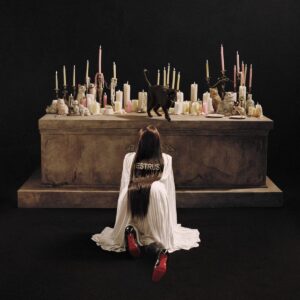
Pochette officielle - Atlantic Records
It is one of the most anticipated returns of the late summer. Alex Warren, who broke through with the runaway hit “Ordinary,” released Wildchild on 28 August, his second album for Atlantic Records. Thirteen tracks, just under forty minutes, and one intimate thread running through it all: grief for his late parents and love for his wife, Kouvr Annon. This is pop at human scale, where the anthem sits right next to the confession.
An album born of grief and love
The album title is no throwaway: Wildchild was the nickname Warren’s father gave him. Across the record, snippets of his father’s voice surface between songs, turning the listen into a family album as much as a pop one. Warren lost both parents young, and that absence runs through every track, from the barest regret to open gratitude. Rather than sink into sadness, he makes it luminous, carried by near-gospel choirs and stadium-sized hooks.
The other great presence here is Kouvr Annon, his wife, to whom he addresses several head-on declarations. “Rescuer,” issued a few weeks before the album, is the most explicit: a thank-you to the person he says pulled him out of the dark, and it lands differently once heard at the heart of the record. It is the kind of song that reframes everything around it, turning a set of catchy singles into something closer to a diary you can hum.
From “Ordinary” to “Wildchild”: the confirmation
Barely a year ago, Alex Warren was, to many, just another online face who had turned to singing. Then “Ordinary” swept everything aside, settling in at the top of the charts on both sides of the Atlantic and making him one of the biggest pop breakouts of the decade. Wildchild had a clear job to do: prove there was an artist, and not just a single, behind the phenomenon. The album answers by embracing a wider palette, from guitar-led folk to soul flights and nods to classic American variety pop. It is a season busy with third and second albums that stretch their makers; Jorja Smith’s dancefloor turn is another good example of that same restlessness.

Nile Rodgers and John Mayer, marquee guests
For a second album, the guest list says a lot about the ambition. The opener, “Emerald Eyes,” carries the signature of Nile Rodgers, the Chic legend whose rhythm guitar shaped forty years of hits, a co-sign that roots the record in an openly disco-and-pop lineage. To close, the title track “Wildchild” features John Mayer, whose guitar wraps around the longest and most raw song on the album. Between those two bookends, production stays in the hands of Adam Yaron, Warren’s regular collaborator, who keeps the sound warm and unhurried.
The singles that paved the way
Wildchild did not appear out of nowhere: four singles trailed it over nearly seven months. “Fever Dream” opened proceedings in February, built on a jittery piano and a memory, the first time he met Kouvr. “Fine Place to Die” followed in spring, “Passenger” in early summer, then “Rescuer” in August, like a love-struck countdown. Across the album, these tracks slot in among quieter songs such as “I Miss You More” and “Only Thing Left,” which voice absence without overstatement.
Critics are split: many praise the record’s sincerity and emotional honesty while noting a certain sameness in the production, as if every chorus had been engineered for repeat plays. Still, Wildchild keeps its most important promise: giving substance to an artist many expected to hear on a single song only. The “Fever Dream” video remains the best way in.