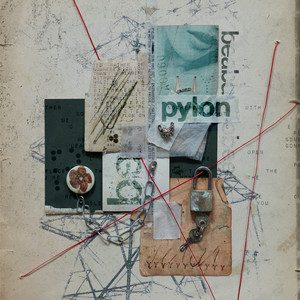
Pochette de l'album « The Singer in My Band » — This Is Lorelei / Matador Records
Some records don’t try to impress you, and end up staying with you for a long time. The Singer in My Band, the third album from American songwriter Nate Amos under the name This Is Lorelei, is one of them. Out 11 September 2026 on Matador Records, this set of eleven songs trades experimentation for a bright, storytelling americana, and stands as the warmest and most assured record of Amos’ career. It’s our album of the week.
A quiet craftsman and a road record
Behind This Is Lorelei is Nate Amos, a New York songwriter also known as one half of the duo Water From Your Eyes. Under this alias he works almost entirely alone: he writes, plays and produces most of the music himself. After 2024’s acclaimed Box for Buddy, Box for Star, expectations were high. His answer is a kind of letting go: rather than piling up ideas, he tightens, strips back, and trusts the song.
The Singer in My Band was conceived on the road. Amos says he dreamed up most of these songs in the car, daydreaming without any instrument at hand, before recording them at his home studio in Brooklyn. The album was in fact finished before he even signed to Matador. It carries a distinctive feeling: landscapes rushing past a window, towns passed through, characters met for the length of a single stop. It’s a record of journeys as much as destinations.
Storytelling americana
This choice of restraint says a lot about where Amos stands in his career. With Water From Your Eyes he explored more abstract territory, between art rock and homemade electronics; as This Is Lorelei, he allows himself a frontal sincerity that almost cuts against the grain of the moment. The Singer in My Band is not afraid to be direct, or to embrace melodies you remember on first listen. It’s a wager: that a simple, well-told song is worth more than a studio feat.
Musically, Amos leans far from his knottiest work. Here it’s folk, bright country and a very classic sense of American songwriting. You can feel his admiration for bluegrass, less for its virtuosity than for its gift for storytelling: each track plays like a short story peopled with slightly battered characters. Critics agreed almost unanimously, hailing the warmest and most focused record of his career.
That simplicity is deceptive. Beneath the surface of an easygoing country album lies real work in writing and arrangement, where every detail counts. Amos sings of love, grief and death with a disarming lightness, and it’s exactly that mix that makes The Singer in My Band so endearing. At times it recalls the way other artists have reinvented American roots music without nostalgia, like Alabama Shakes or, in a different vein, Orville Peck.
The album’s cohesion also owes much to its handmade making. Recording at home, alone at the controls, Amos kept his hand on every sound, every breath. The result is an organic production, never glossy, where you can hear the grain of the guitars and the fragility of the vocals. That homespun quality is no flaw: it gives the record its intimacy, the sense of listening to someone singing in the next room rather than a well-oiled machine. The eleven tracks flow without a dull moment, between gentle ballads and livelier runs, and form a strikingly unified whole.
Three tracks to get you in
“Billy Came Back,” chosen as the lead single, sums up the album on its own. Over a calm tempo and a clear guitar, Amos unspools the story of a return, with an eye for detail that turns an anecdote into a universal song. It’s an ideal way in: immediate without being simplistic.
“Oh No Now My” shows the record’s other face: edgier, almost brisk, a reminder that Amos’ americana doesn’t rule out energy. The song moves fast, carried by a catchy melody, and proves the songwriter can also stand a tune up in barely two minutes.
“The Singer in My Band,” the title track, acts as the emotional heart of the whole. This is where the album gains its full stature: a song about music, about the people who make it, and about the strange bond between a singer and their band. Listen to it to understand why Amos named the entire album after it.
There’s also something quietly generous about the way the album invites you in. It never asks for your full attention with a flashy hook; instead it earns it, verse by verse, until the characters and their small dramas start to feel like people you know. That patience is rare, and it’s what separates a pleasant listen from a record you return to. On The Singer in My Band, Amos sounds less like a musician chasing a moment than one who has finally found his voice.
A keeper
The Singer in My Band isn’t after a grand statement. It moves at its own pace, deepens with every listen, and slowly settles in for good. In a fall crowded with releases, that may be its finest quality: an album that doesn’t force itself on you, but stays. For anyone who loves well-written songs and bright country, it’s the appointment of the week.
The full tracklist:
- I Will Eat My Heart in the Morning Light
- Oh No Now My
- Billy Came Back
- Watching Heaven Fall
- Sailing (Your Baby’s Down)
- The Singer in My Band
- Nitro
- Hey Sarah Is It Gonna Rain Forever
- The Kid With the Crown
- And I Haven’t Seen My Love in Quite a While
- Don’t You Cry in Lonesomeness