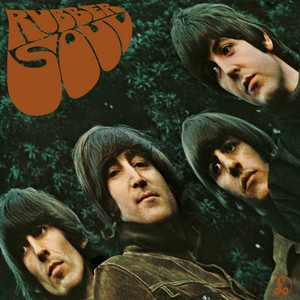
Pochette officielle — Apple Corps / UMG
Sixty years after its release, “Rubber Soul” is back in the spotlight. Boosted by a special edition released on October 2, the Beatles album has just returned to the US albums chart at number four — a rare feat for a record first issued in 1965, and a good excuse to revisit the moment the band stopped being just a pop phenomenon and became something closer to a subject of study.
The record where everything changed
Recorded in barely four weeks in the fall of 1965, “Rubber Soul” is the first album the Beatles could shape without the constant pressure of touring, filming, or radio commitments. The shift is audible from the first notes: acoustic guitars take over from straightforward rock’n’roll, sitar makes a notable appearance on “Norwegian Wood,” and the lyrics, carried by a more introspective John Lennon than ever before, move away from simple romance toward something murkier, sometimes more bitter. Ringo Starr would later call it their “departure record” — the one that paved the way for “Revolver” and then “Sgt. Pepper’s.” On release, the album sat at number one on both sides of the Atlantic for several weeks, and critics, already won over, have ranked it among the band’s peaks ever since.
Why this edition matters
What makes it worth revisiting today is the work producer Giles Martin and engineer Sam Okell put into this new “Special Edition.” All fourteen tracks have been remixed in stereo and Dolby Atmos, some brought together in a single coherent edition for the first time, alongside the original mono mix and the historic American version issued by Capitol. The most complete formats go beyond the album itself: the Super Deluxe edition adds twenty previously unreleased takes and three never-before-heard demos, including a Paul McCartney demo of “We Can Work It Out” and a John Lennon demo of a song that had remained entirely unknown until now, “Little Girl.” The standalone single “We Can Work It Out” / “Day Tripper,” released around the same time but never folded into the original album, rounds out the most generous box sets, available on CD, vinyl, and high-resolution Blu-ray.
Every reissue of this scale carries the same risk: how do you modernize a sound without betraying what made it distinctive in the first place? The result, praised by critics since its release, favors clarity over effect: the vocals breathe more, the guitars regain some grain, without ever tipping into an over-polished cleanup that would have erased the particular texture of the 1965 tapes.
Three songs to understand the album
“Norwegian Wood (This Bird Has Flown)” kicks off the record’s experiments: George Harrison lays down the first sitar notes ever heard on a Western pop song, over a Lennon lyric that hints, without quite saying so, at an extramarital affair. The blend of Indian instrumentation and folk structure remains, sixty years on, one of the boldest moments in the band’s entire catalog.
“In My Life” closes side B on a far more personal note: Lennon reflects on the places and faces of his Liverpool childhood, before a brief harpsichord-like interlude — actually a George Martin piano part recorded then sped up — underlines the song’s melancholy. It remains one of the most covered and most quoted songs in the Beatles catalog, routinely ranked among the greatest songs ever written by specialist outlets.
“Michelle,” finally, illustrates the album’s other side: a ballad largely written by Paul McCartney, sung partly in French, which would earn him the Grammy Award for Song of the Year a few months later. Between Lennon’s experiments and McCartney’s classic melodies, “Rubber Soul” lives entirely in that balance — two sensibilities that don’t resemble each other at all, yet complement one another perfectly on this particular record.
The original UK tracklist
- Drive My Car
- Norwegian Wood (This Bird Has Flown)
- You Won’t See Me
- Nowhere Man
- Think for Yourself
- The Word
- Michelle
- What Goes On
- Girl
- I’m Looking Through You
- In My Life
- Wait
- If I Needed Someone
- Run for Your Life
The full album
For anyone wanting to (re)discover the record from start to finish, the newly remixed 2026 edition is now available across every streaming platform.
Sixty years after its release, “Rubber Soul” clearly hasn’t lost its ability to surprise, or to reinvent itself commercially. In a landscape saturated with weekly releases, watching a 1965 album climb back into the US top five says something fairly rare: some albums don’t age, they simply change audiences.
A comeback that owes a lot to collector box sets
This kind of chart comeback is first and foremost a matter of physical sales mechanics: Super Deluxe editions and often limited, numbered vinyl box sets count toward the same charts as the newest releases, and carry real weight with a collector base willing to buy a fourth or fifth version of the same record for a handful of unreleased takes. But reducing this comeback to a purely commercial argument would be unfair: six decades on, “Rubber Soul” still shapes entire generations of musicians, from delicate pop to introspective folk, and remains a go-to reference for artists who weren’t even born when it came out. Rolling Stone still ranks it among the greatest albums of all time, and every new reissue inevitably reignites the debate over where it sits in the band’s catalog — just behind, for many, “Revolver” and “Abbey Road.”