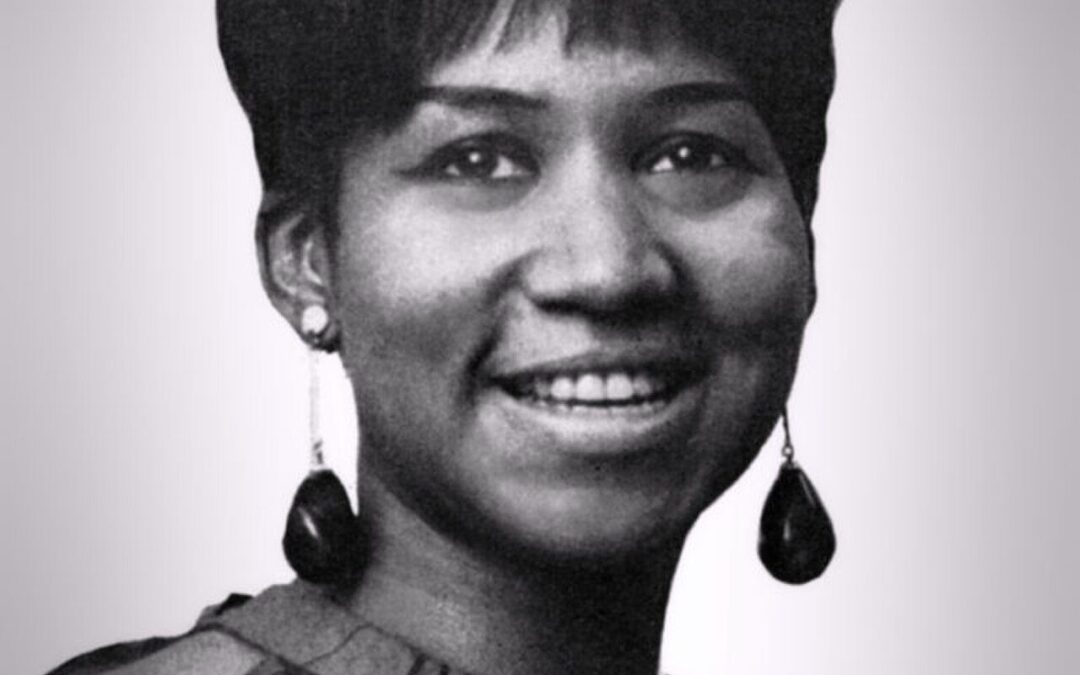
Aretha Franklin, publicite Atlantic Records, 1967 (domaine public)
A voice forged in Detroit gospel churches ended up rewriting the rules of pop, soul and Black American music as a whole. The daughter of a preacher, singing in Baptist churches before she was even ten, Aretha Franklin never needed a producer to exist: she imposed her own way of singing, turning songs written by other people into versions so definitive that their own authors ended up stepping aside. Ten tracks, from the late-1960s Atlantic sessions to the pop duet that closed out her most unlikely decade, to understand why she is still called the Queen of Soul more than fifty years after her first hits, and why so much of modern pop and R&B still borrows, knowingly or not, from the phrasing she invented in these very sessions.
Respect (1967)
The song already existed, written and recorded by Otis Redding two years earlier: a man’s song demanding respect when he gets home from work. With her sisters Erma and Carolyn helping shape the backing vocals, Aretha Franklin flips the meaning almost entirely, adding the R-E-S-P-E-C-T spell-out and the famous “sock it to me,” and flipping the song into the first person. The result becomes an anthem for both the civil rights and women’s movements, a No. 1 on the Hot 100, and one of the first songs inducted into the Grammy Hall of Fame. As the story goes, Otis Redding himself, on hearing what she’d done with it, admitted — half defeated, half in awe — that the song wasn’t his anymore.
(You Make Me Feel Like) A Natural Woman (1967)
Carole King and Gerry Goffin wrote it after producer Jerry Wexler tossed them the title as a challenge. King later said that on hearing what Aretha Franklin had done with it, she knew she would never need to sing it herself again — the song belonged to someone else now. Fifty years on, Aretha was still climbing on stage to sing it in King’s honor, at a ceremony where even the sitting U.S. president, watching from the audience, was seen wiping away a tear.
Chain of Fools (1967)
One hypnotic, endlessly repeated guitar riff is all Aretha Franklin needs to build one of her most sampled records. Written by Don Covay and carried by backing vocals from her sisters and from Cissy Houston, Whitney’s mother, the song climbs to No. 2 on the Hot 100 and spends weeks at No. 1 on the R&B chart.
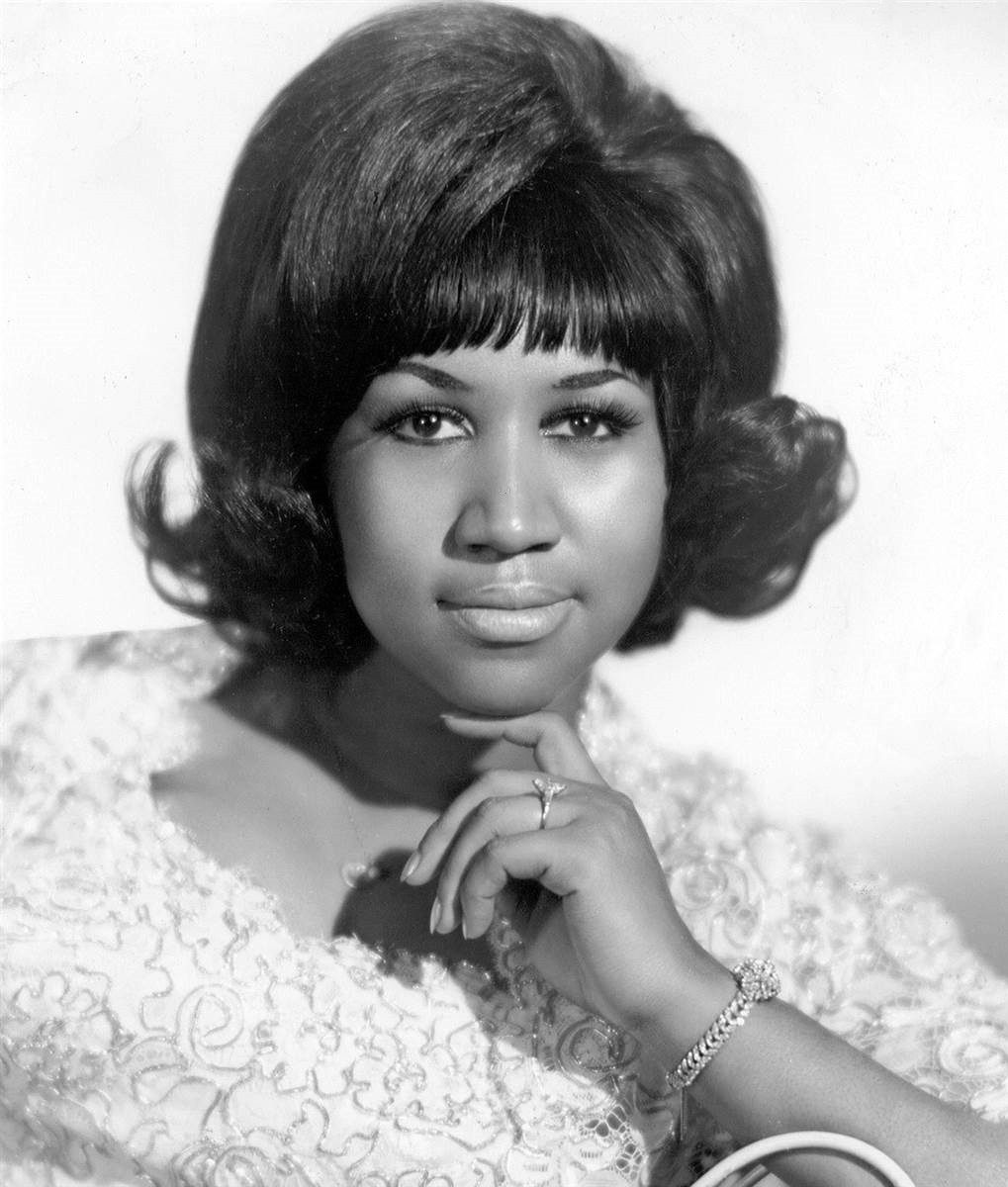
Ain’t No Way (1968)
Written by her sister Carolyn Franklin, this heartbreak ballad lets Aretha show the full range of her voice, from low register to the piercing falsetto Cissy Houston holds through the song’s closing section. It’s often cited as one of the single greatest vocal performances in her catalog — a reminder that beneath the powerhouse image, there was always fragility too.
Think (1968)
Co-written with her then-husband Ted White, “Think” hammers out the word “freedom” in the middle of segregation-era America without ever losing its funk groove. The song found an unexpected second life in 1980, when Aretha Franklin performed it, in a waitress uniform, in a now-iconic scene from The Blues Brothers.
I Say a Little Prayer (1968)
Burt Bacharach and Hal David had written it for Dionne Warwick. Aretha Franklin recorded it almost in passing, originally meant as a simple B-side, with her backing singers improvising gospel-choir responses on the fly. The result eclipsed the original so thoroughly that many listeners today discover Warwick’s version after Aretha’s, rather than the other way around.
Spanish Harlem (1971)
A cover of Ben E. King’s 1960 hit, “Spanish Harlem” proves Aretha Franklin was never confined to deep soul alone: the voice turns lighter, almost pop, over string arrangements that lean as much toward Latin flavor as rhythm and blues. The song climbs to No. 2 on the Hot 100, proof she could inhabit songs that had nothing to do with church or blues just as convincingly, reworking someone else’s hit the same way she had already done with Otis Redding’s and would keep doing for another two decades.
Rock Steady (1971)
Written by Aretha herself and driven by a relentlessly tight funk groove, “Rock Steady” would go on to become one of the most sampled records of the hip-hop decades that followed. Proof that, by the early 1970s, she was no longer just an interpreter — she was composing and shaping her own groove.
Freeway of Love (1985)
The shift into the 1980s could have been fatal for many soul legends. Aretha Franklin instead found a new wind with producer Narada Michael Walden and a saxophone solo from Clarence Clemons of Bruce Springsteen’s E Street Band. “Freeway of Love” sent her back to the top of the charts just as MTV was rewriting the rules of pop, without her having to abandon a single second of her past.
I Knew You Were Waiting (For Me) (1987)
The duet with George Michael, then at the peak of his post-Wham! fame, closes the loop in the most symbolic way possible: the Queen of Soul and pop’s new generation trading the same chorus, on a song that became the second and final U.S. No. 1 of Aretha Franklin’s career. A torch-passing moment disguised as a global hit.
Twenty years separate “Respect” from this duet with George Michael, and the voice had lost none of its power or authority in between. In 1987, Aretha Franklin also became the first woman inducted into the Rock and Roll Hall of Fame, a recognition that honored the songwriter as much as the singer she had been across several of these ten tracks. From the starkest ballad to the tightest funk workout, by way of the cover that erased its own original, these songs sketch the portrait of an artist who never had to choose between popularity and ambition, and who kept finding new rooms and new generations to sing to, long after those first church pews back in Detroit.