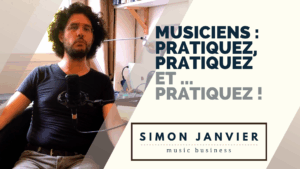
Nicolas Godin, one half of Air — the French duo behind Moon Safari — holds a blunt position on mixing consoles: he doesn’t want one, he considers it a sound engineer’s tool, and he doesn’t own one in his own studio. Coming from a musician whose sound production is a benchmark of the genre, the statement is worth pausing on — because it dismantles a stubborn home-studio belief.
A musician’s position, not a technician’s
In the interview that inspired the video, Nicolas Godin retraces his career and explains how he builds his music. In passing, he mentions his lack of interest in mixing consoles, which he sees as belonging to a trade other than his own, and says he doesn’t keep one in his personal studio.
The nuance matters. He is not saying consoles are useless, or that they sound bad. He is saying they don’t match his way of working — that of a musician who composes, stacks, tries things, keeps or discards, and for whom the central object is the instrument, not the mixing desk.
It is a view you rarely hear stated that plainly, because the console remains the symbol of the professional studio. A big backlit desk has become the compulsory backdrop of studio photography, to the point where the tool and the skill have been quietly conflated.
What a console gives you, and what it costs
What a console actually gives you is neither magical nor mysterious: it is a physical relationship with balance. Ten fingers on ten faders, and you hear the mix move as a whole, taking global decisions far faster than by clicking track by track. On analogue models you also get a circuit colouration that is part of the sound of certain records.
The cost is just as concrete. Session recall — reproducing exactly a mix signed off three weeks earlier — is laborious, where the computer does it in one click. You need the space, the maintenance, the power, and often a technician’s visit when the gear has travelled.
A memory from running a studio
I spent several years as technical director of a studio, including a long stretch built around a large digital console imported from the United States. The patchbay and the power supply had to be adapted before we could even switch it on. The sessions that followed were magnificent — and every change of setup took an afternoon. That is when I understood that the debate is never « analogue versus digital »: it is the ratio between what the tool gains you and what it takes from you in logistics.
The Trident paradox at Studio Atlas
A pleasing detail: an analogue Trident console sits in Studio Atlas, the band’s headquarters. A contradiction? Not really. A shared studio, hosting sound engineers and band sessions, does not have the same needs as a personal writing space. There, the console is a collective work tool and a common interface as much as a mixing machine.
That is exactly the distinction that matters for you: the question is not « do I need a console? » but « who is going to use it, and what for? »
How to decide for your own studio
Three questions are enough, in this order.
- How many sources do you need to balance at once, in real time? If the answer is « one or two », a control surface will change nothing. If you regularly record a whole band, the physical gesture starts paying for itself.
- How many times do you come back to a mix? A project that runs for months, with back-and-forth, argues very strongly for working in the box and its total recall.
- What tires you out? If it’s the screen, a touch surface or a small control console will save you more hours than a new plugin. If it’s the cabling, the reverse.
Note that none of these questions is about sound. That is not an oversight: for the same budget, your monitoring and the room’s acoustic treatment will transform your work far more than a console will. It is the same reasoning set out in the article on mastering, where a studio’s priority investment is always monitoring.
What the video covers
The video above — in French — goes back over Nicolas Godin’s interview and what it teaches an independent musician. Beyond the console question, his account of his beginnings is instructive: he doesn’t come from a family of musicians, he met friends at secondary school to make music with — some of whom became famous — and it is perseverance, far more than some revealed talent, that explains his trajectory. He also talks at length about his relationship with gear, and how being properly equipped is what lets you carry an idea all the way through.
Frequently asked questions
- Does an analogue console really make a mix « sound »?
- It colours it, which is not the same thing. An analogue circuit adds non-linearities that many find flattering, and that have become a period signature. But no console fixes a shaky arrangement or a bad take.
- What about a control surface with no audio?
- For a musician that is often the best compromise: the physical gesture and the overview, without the patchbay, without the maintenance, and with the sequencer’s total recall. The budget is in a different league from a real console.
- How do I know whether my limits come from the tool?
- Play one of your mixes to someone whose ears you respect and ask what bothers them. If the answer is about balance, arrangement or the take, no gear will change it. If it is about things you can’t hear at home, the problem is your monitoring — not your desk.
- Do I need a sound engineer if I already have good gear?
- These are two independent things. Gear gives you possibilities; a sound engineer brings you a method and a trained ear. See only go to a studio when you need to to decide case by case.
Going further
- Only go to a studio when you need to — where to put your production budget.
- Mastering for musicians — why monitoring comes before everything else.
- Matthieu Chedid, the guitar man — identity built through the instrument.