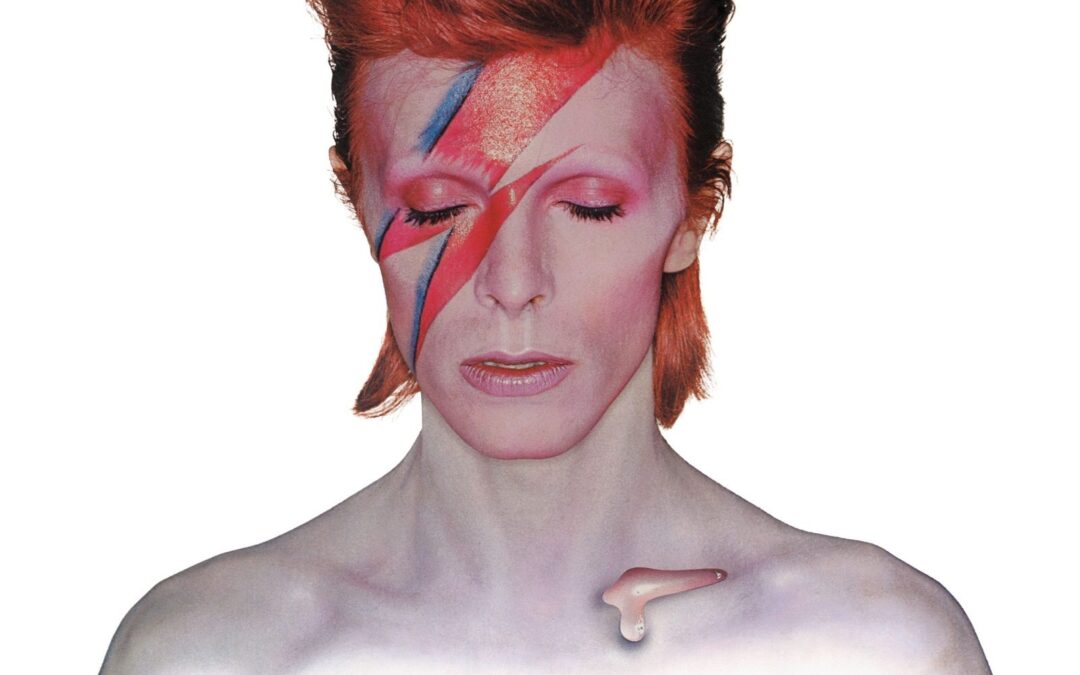
Aladdin Sane (1973) et son éclair : l'une des images les plus célèbres de David Bowie. Pochette officielle.
How do you sum up David Bowie in ten songs? The task borders on the impossible. Across half a century, the man of a thousand faces shed his skin with every record, inventing characters, embracing genres only to abandon them, always a step ahead of his time. From spacey folk to plastic soul, from flamboyant glam to Berlin electronica, no box ever held him for long.
Being exhaustive is out of the question: it would take twenty songs, or a hundred. Here instead are ten ways in, ten milestones that explain, better than any speech, why Bowie remains one of the most influential figures in the history of rock — alongside the other British greats who shaped the legend.
“Space Oddity” (1969)
It all begins with a lift-off. Released days before Apollo 11 touched down on the Moon, this spacey ballad gave Bowie his first hit and, above all, his first character: Major Tom, an astronaut lost in the void. Tony Visconti, dismissing the track as opportunistic, left the production to Gus Dudgeon; you can hear a Stylophone gifted by his friend Marc Bolan. The BBC used it in its Moon-landing coverage, sealing from the start Bowie’s genius for catching the mood of the moment.
“Life on Mars?” (1971)
Behind its surreal imagery hides an act of revenge. Bowie had written English lyrics over the French melody of ‘Comme d’habitude’; the project fell through and Paul Anka turned it into ‘My Way’. ‘Life on Mars?’ is his answer, built on a cousin chord progression and lifted by Rick Wakeman’s piano. The result is a cinematic fresco, a pop melodrama of staggering scope that Mick Rock’s video — turquoise suit against a white backdrop — burned into the collective memory.
“Starman” (1972)
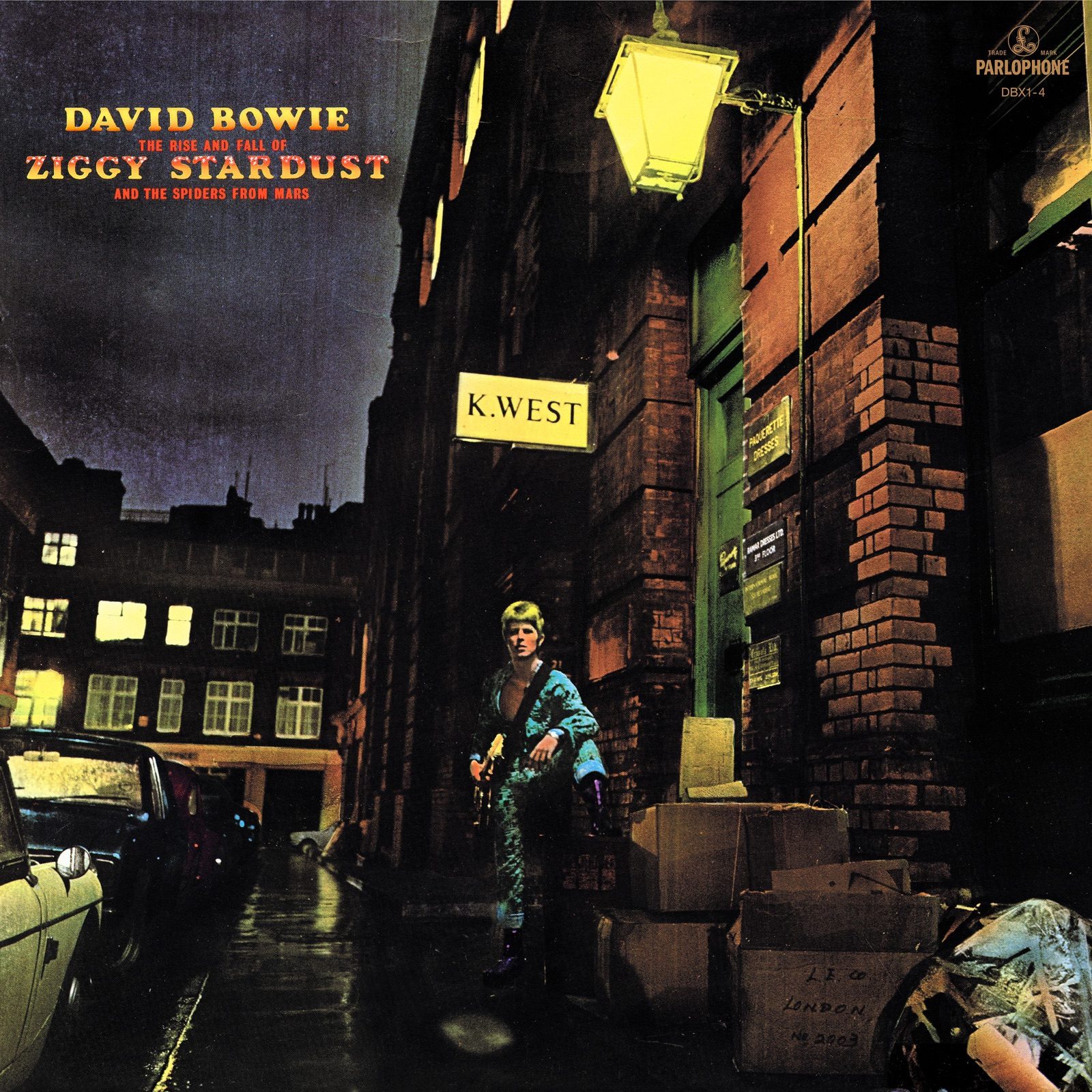
A single TV appearance was enough. Added late to the ‘Ziggy Stardust’ album at the label’s request, ‘Starman’ and its octave-leaping chorus (an owned-up nod to ‘Over the Rainbow’) detonated on Top of the Pops on 6 July 1972. Bowie, carrot-haired and with his arm slung around Mick Ronson, points straight at the camera: a whole generation of future musicians swears it changed that night. Rarely have three minutes of television reshaped British pop so completely.
“Ziggy Stardust” (1972)
Here is the mirror-song of the character that swept everything away. Driven by an immortal Mick Ronson riff, it tells the rise and fall of an alien rock star, a self-destructing prophet of a ruined future. Bowie invents meta-pop here: a song about an idol he would himself kill off on stage, at London’s Hammersmith Odeon in July 1973, announcing it would be ‘the last show we’ll ever do’. Ziggy was dead; the legend was only just beginning.
“Rebel Rebel” (1974)
This is the farewell to glam and one of the most recognisable riffs in rock. Notably, this time it is not Ronson but Bowie himself playing that raw, hypnotic guitar. An anthem to androgyny (‘You’ve got your mother in a whirl’), ‘Rebel Rebel’ closes the glitter years in style before the great swerve into soul and then Berlin. One last glam flourish — jagged, insolent — that generations of bands would cover in search of the same thrill.
“Heroes” (1977)
Recorded in Berlin with Brian Eno and Tony Visconti, ‘”Heroes”‘ is a cry of resistance beneath the windows of the divided city. Robert Fripp’s soaring guitar and the famous three-microphone technique — gates that open only as Bowie pushes his voice — build an overwhelming swell of tension. The quotation marks in the title signal the irony: these heroes are only so ‘just for one day’, inspired, so the legend goes, by a couple kissing near the Wall. An absolute peak.
“Ashes to Ashes” (1980)
A decade after ‘Space Oddity’, Bowie returns to Major Tom to settle the account: ‘We know Major Tom’s a junkie’. The loop closes in an angular, spectral funk. The video, directed by David Mallet — Bowie as a lunar Pierrot on a solarised beach, a bulldozer at his heels — was one of the most expensive of its era and laid the groundwork for the New Romantic aesthetic. A UK number one, it is a summing-up of a song, at once a reckoning and a headlong rush forward.
“Under Pressure” (1981)
A summit meeting, born almost by accident. Gathered at the Mountain Studios in Montreux, Bowie and Queen improvised, in a jam, what would become one of the greatest duets in rock history, built around a now-mythical bassline. Bowie and Freddie Mercury answer and challenge each other, rising together toward a heart-rending finale. With no time to spare — both camps were touring — the video made do with archive footage. The song itself remains untouchable.
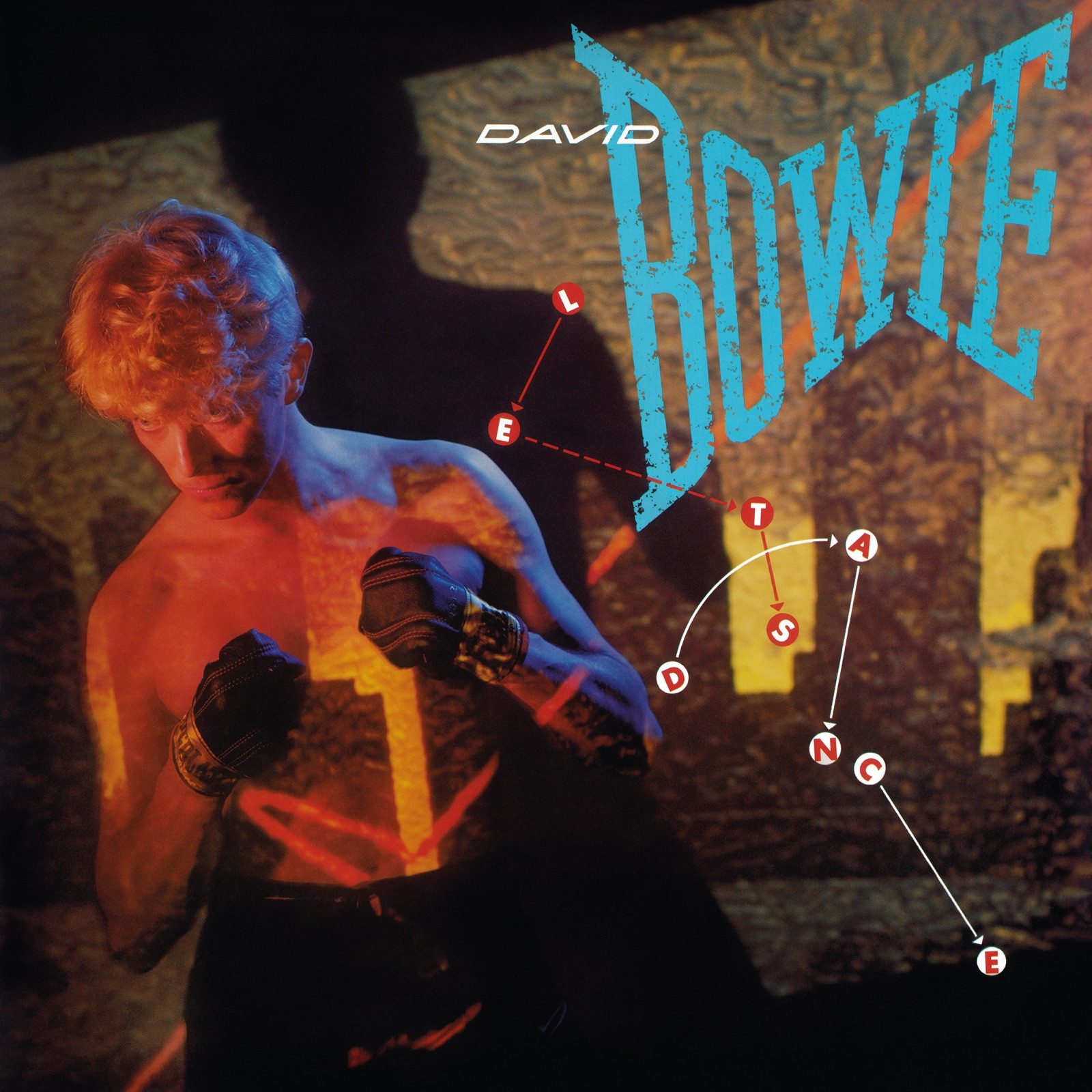
“Let’s Dance” (1983)
The great mainstream turn. Handed to Nile Rodgers (Chic) for production, ‘Let’s Dance’ rocketed Bowie to the top of the charts on both sides of the Atlantic and made him a global star of the MTV era. On lead guitar, a young Texan unknown to the wider public: Stevie Ray Vaughan. Filmed in Australia, the video denounces racism against Aboriginal people. Unstoppable, immediately groovy: Bowie proved he could conquer the world by dancing, too.
“Lazarus” (2016)
The testament. Released weeks before his death, ‘Lazarus’ opens on those chilling words: ‘Look up here, I’m in heaven’. Bowie, who knew he was doomed by cancer, turned his passing into a final work of art. Johan Renck’s video shows him blinded, struggling in a hospital bed before retreating into a wardrobe. Out three days before he died, the track closes the album ‘Blackstar’, released on his 69th birthday. A farewell controlled to the very last breath.
Ten songs, ten lives. We could just as easily have chosen ‘Changes’, ‘Sound and Vision’, ‘Modern Love’ or ‘Where Are We Now?’: such is the dizzying reach of a discography where every album opens a world. One certainty remains: by stubbornly refusing to repeat himself, David Bowie left pop a lesson that has not aged a day — the lesson of freedom.