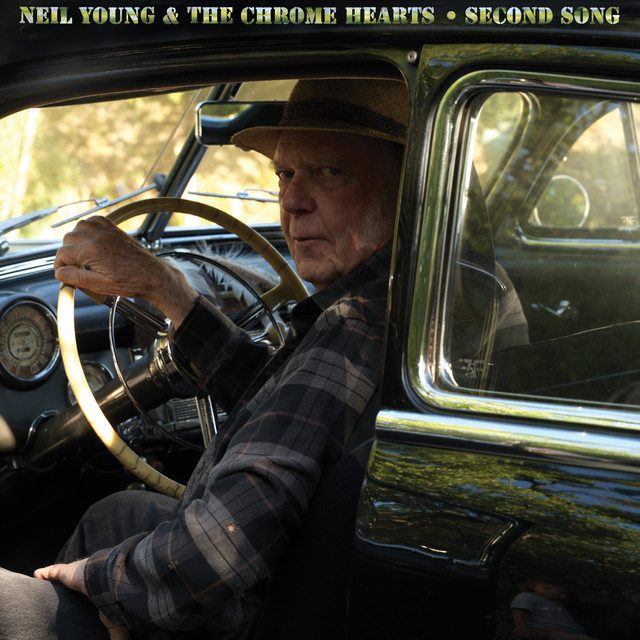
Pochette officielle — Neil Young & The Chrome Hearts, Reprise Records
Neil Young shows no sign of slowing down, either in output or in his capacity to surprise. Second Song, his new album with The Chrome Hearts, arrived on September 18 and closes out a cycle that started earlier this year with the live album As Time Explodes. It’s the second studio record Young has made with this lineup, and it returns to the semi-acoustic vein long associated with milestone albums in his catalogue, from Comes a Time to Prairie Wind. Seven songs, forty-two minutes: modest on paper. In practice, one of the most fully inhabited records he’s released in years.
Five new songs, two ghosts from the vault
The record’s construction is simple to describe but harder to hear cleanly: five brand-new songs sit alongside two previously unreleased versions of older Young compositions, revived and reworked with the Chrome Hearts. The result never plays like a collection of leftovers. It works more like a conversation between two eras of Young’s songwriting, where the new tracks and the archival ones answer each other closely enough that it’s not always obvious, by ear alone, what was written yesterday and what dates back decades.
The tracklist is short enough to count on two hands:
- The Foggy Edge of Time
- Day After Day
- Earth Girl
- Second Song
- Casting Me Away From You
- Soon I Might Be Going
- I’ll Love You Forever
Between the three songs carrying the record, the other four play a role that’s just as necessary. Earth Girl and Casting Me Away From You hold the album’s middle stretch at a more restrained tempo, almost like breathing room between the bigger pieces around them, while I’ll Love You Forever closes things out on a simple promise, with no unnecessary flourish. That refusal of grand gestures is exactly what sets Second Song apart from the tribute or testament albums artists of Young’s generation sometimes release: nothing here is presented as a final word.
This taste for reworked archival material isn’t new for Young. Since launching his sprawling digital archive project, where he documents and republishes decades of unreleased recordings, the idea that an old song might resurface in a new form, re-recorded with a different band, has almost become part of his current working method. The Chrome Hearts, a lineup built around musicians well versed in his acoustic world, serve exactly that project: giving old songs a second life rather than freezing them in a single definitive version.
Second Song, eleven minutes in balance
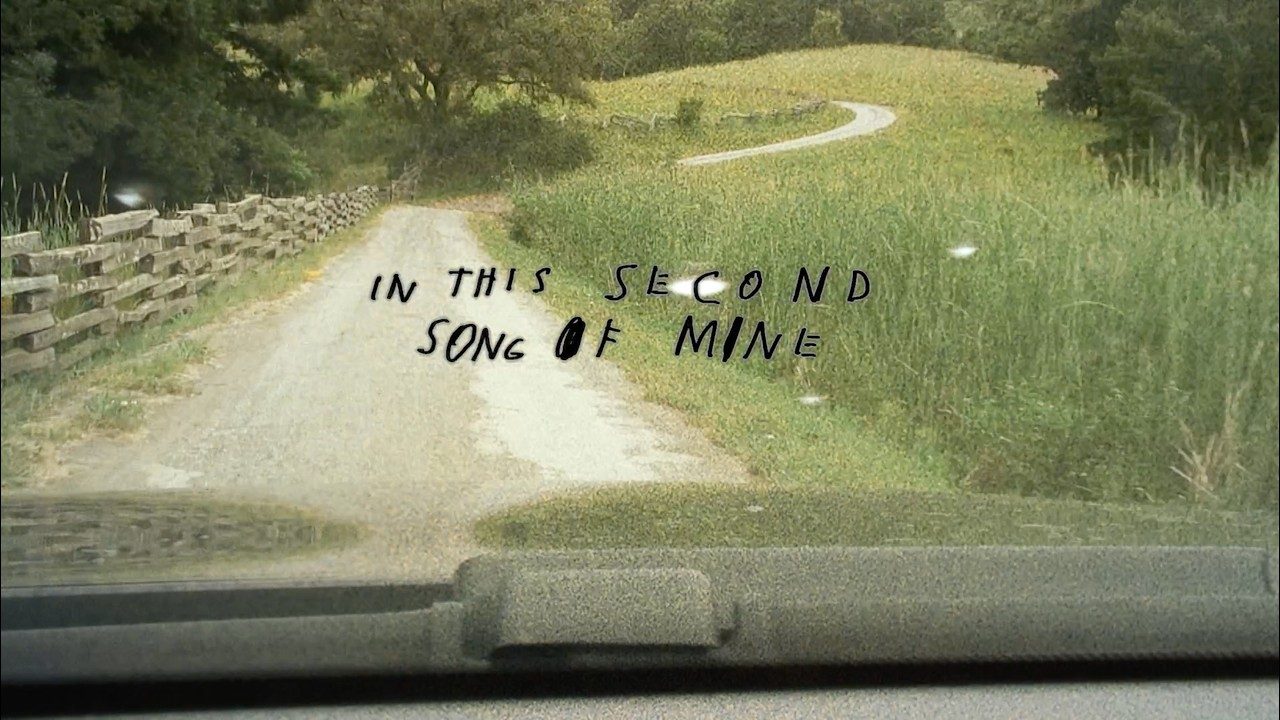
The title track is also the album’s peak. Eleven minutes and fifteen seconds, built almost in real time, with Young’s acoustic guitar doubled by Micah Nelson’s dulcimer, a spur-of-the-moment studio decision that gives the song its silvery, slightly floating texture. Young sings about memory and old habits without slipping into resigned nostalgia: “Too much has changed around us, but we can bring it back somehow,” he sings between bursts of harmonica, carried by drummer Anthony LoGerfo’s measured swing. It’s the kind of sprawling, river-like song Young has allowed himself since Le Noise, and he still handles the form with ease.
Day After Day and Soon I Might Be Going, the other two peaks
Day After Day opens the record at a livelier tempo, almost a dance step, deliberately contrasting with the length of the centerpiece track. It’s the most immediate song on the record, one that works without needing familiarity with the rest of the album to land.
Soon I Might Be Going, meanwhile, brings the record almost to a close on a more uncertain note, somewhere between acceptance and unease about time passing. Several English-language critics singled it out as one of the record’s three true high points, alongside the title track and Day After Day — a sign that Second Song doesn’t lean on a single carrying single but on a foundation of several strong songs, something rarely true of late-career records.
A rare kind of reception at this stage of a career
British press hasn’t held back on the superlatives: Mojo called the record a “late-career classic,” a phrase rarely used for an artist closing in on six decades of recording. What stands out most on repeat listens is the total absence of autopilot: the Chrome Hearts don’t just back Young up, they steer his writing toward sparser arrangements, where every instrument keeps room to breathe. The decision to bring in a dulcimer on the title track, made on a whim in the studio, says a lot about how this band operates: little calculation, a lot of mutual listening.
It’s not the first time Young has used his music as a political gesture as much as an artistic one, having previously cut ties with Amazon to make his catalogue freely available. With Second Song, the gesture is more intimate: a record that isn’t trying to convince anyone of its relevance, and simply proves it by holding together, song after song.
Best heard as a whole rather than picked apart track by track, the seven songs form a coherent set, built to be listened to that way.
What makes Second Song stand apart from most records released by an artist this deep into a career is precisely its lack of urgency. There is no attempt here to chase a younger audience, no guest verse, no radio-friendly single dressed up to travel outside the album’s own logic. It simply trusts that seven well-built songs, played by musicians who know exactly what the material needs, will carry the record on their own. Six decades in, that trust turns out to be entirely justified.