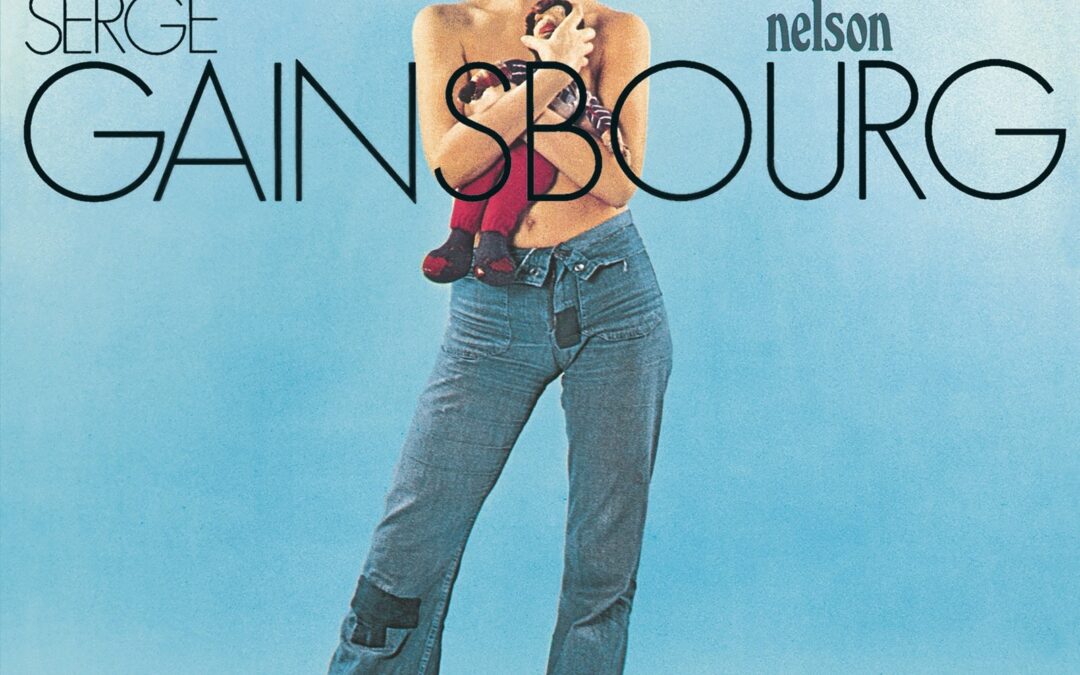
Histoire de Melody Nelson (1971) — Philips/Mercury
There isn’t really an equivalent to Serge Gainsbourg in French music. Across thirty years, the man born Lucien Ginsburg in 1928 was, in turn, a bar pianist, a songwriter for others, a self-styled provocateur, a pioneer of French-language reggae and a towering reference for an entire generation of electronic artists. Ten songs can never exhaust a body of work like his, but they’re enough to map its shape: the melancholy of the early years, scandal turned into a working method, and an almost unique ability to switch genres every five years without ever losing his voice or his audience.
The early years: from music-hall to provocation (1958-1968)
Le Poinçonneur des Lilas (1958)
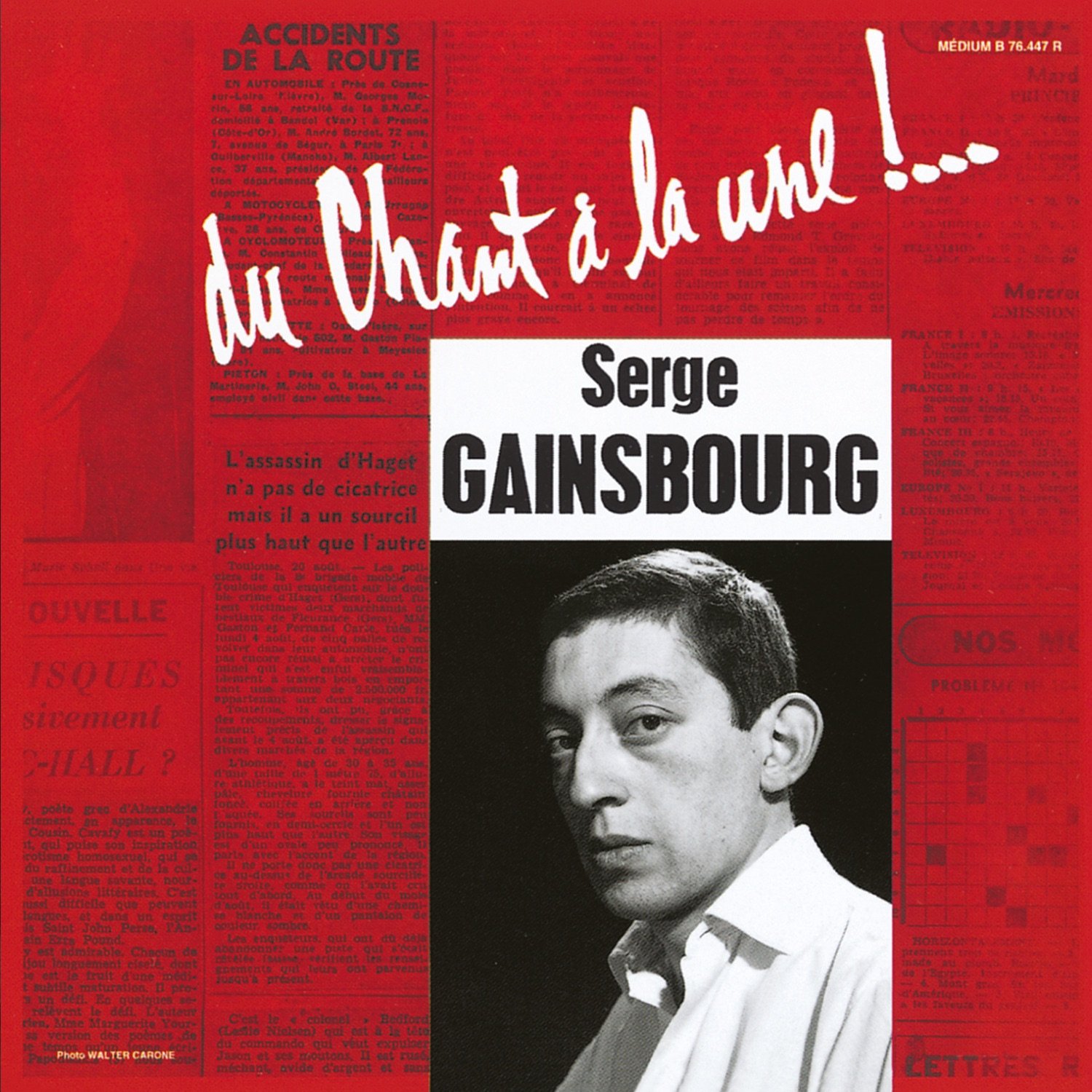
A debut album, a commercial flop, and yet one of the foundational tracks of his entire career. Gainsbourg narrates a day in the life of a Paris subway ticket puncher, condemned to punch holes in tickets until the gesture itself becomes a metaphor for alienation at work. The song immediately sets out what would become his signature: concrete imagery, economy of language, and a social gaze free of either sentimentality or grandstanding. Du chant à la une ! didn’t sell, but the song itself never left the French songbook.
La Javanaise (1963)
Originally written for Juliette Gréco, “La Javanaise” is arguably Gainsbourg’s purest piece of songwriting, before the provocateur persona took over. The title plays on javanais slang, a way of slipping extra syllables into words, twisting a simple musette waltz into something far more sophisticated harmonically. Covered since by dozens of artists, from Gréco herself to contemporary singers, the song remains the clearest proof of his craft as a pure songwriter, well before the scandals to come.
Comic Strip (1967)
With Brigitte Bardot, who became his lover that same year, Gainsbourg invented a genre of his own: the onomatopoeia song, shouted as much as sung, miming a comic-book brawl in full pop-art fashion, its “Shebam! Pow! Blop! Wizz!” barked out like panels from a comic. “Comic Strip” scandalized part of the public with its almost burlesque energy, but it opened the door to a decade of duets with Bardot, including the equally cheeky “Bonnie and Clyde” the same year.
Requiem pour un con (1968)
Written for the soundtrack of Georges Lautner’s film Le Pacha, this near-instrumental track, carried by a drum break that later became a crate-digger favorite, highlights another side of his work: composing for film, something he did throughout his career alongside songwriting. Its minimal groove would be sampled decades later across hip-hop and electronic music, proof that Gainsbourg was already, unknowingly, composing for ears that didn’t exist yet in 1968.
Birkin, a global scandal and the absolute masterpiece (1969-1971)
Je t’aime… moi non plus (1969)
Originally written for Brigitte Bardot, who refused to let it be released while she was still married, the song found new life two years later with Jane Birkin, his new partner by then. The result became the first foreign-language single to reach number one on the British charts, banned from airplay in several countries and even condemned by the Vatican. The breathing, the sighs, the weightless organ melody — everything about this track was built to shock an era that, at bottom, was asking to be shocked.
Melody (1971)
With Histoire de Melody Nelson, a concept album built around an imagined romance with a young red-headed Englishwoman he hits with his car, Gainsbourg and arranger Jean-Claude Vannier delivered what critics today consider his absolute peak, both musically and narratively. “Melody,” the opening track, sets the mood in a few bars of funk bass and psychedelic strings before the spoken narration begins. Barely noticed on release in 1971, the album would go on to influence both British trip-hop and American hip-hop, which mined it for some of its most recognizable samples.
Political provocation: reggae against the establishment (1979)
Aux armes et cætera (1979)
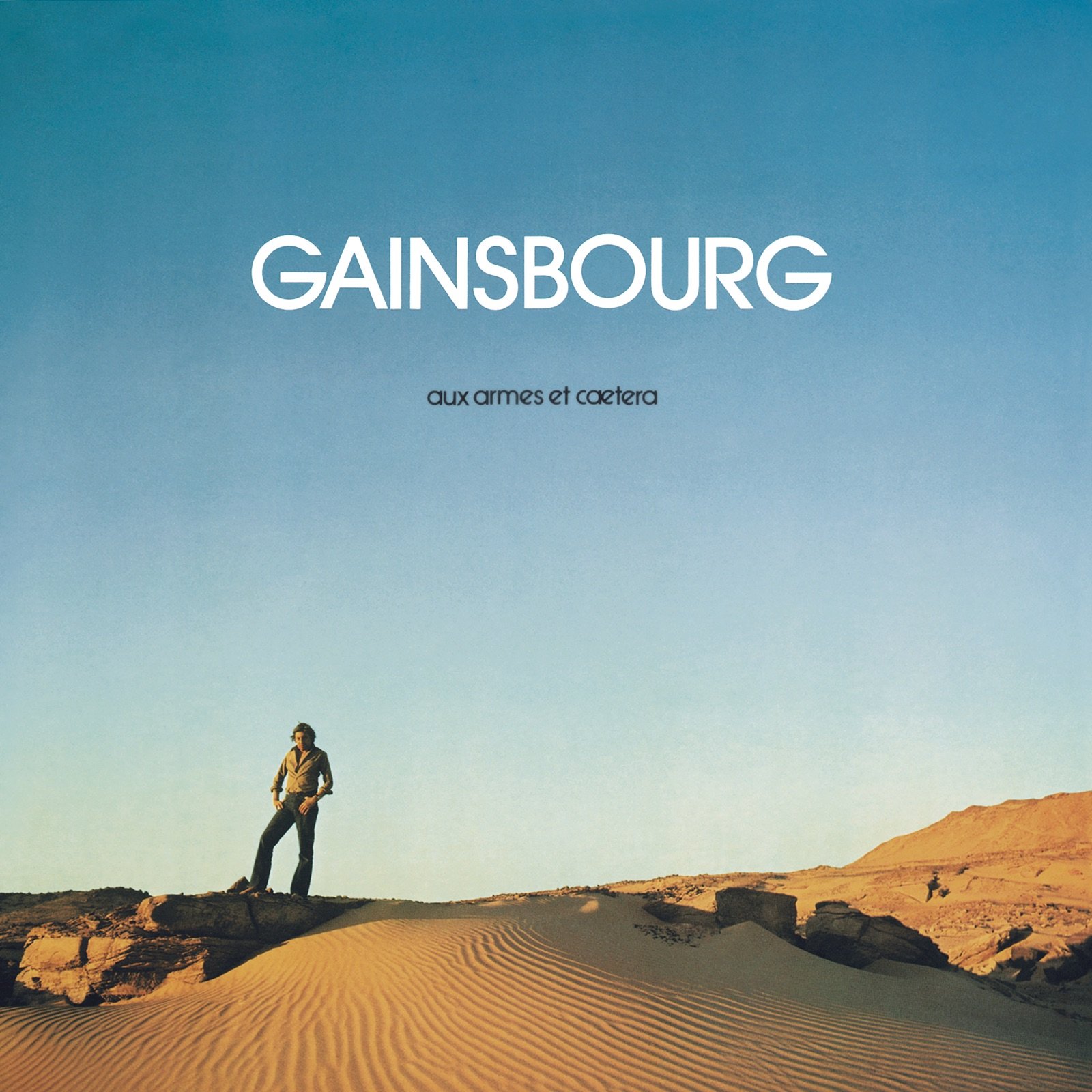
Recorded in Jamaica with Sly Dunbar and Robbie Shakespeare, alongside Bob Marley’s regular backing singers, this reggae rework of the French national anthem, La Marseillaise, triggered one of the biggest scandals of his entire career. Radio and TV stations refused to play it for years, and former paratroopers disrupted some of his concerts; Gainsbourg’s response was to hire actual paratroopers as his own backing singers, defusing the controversy through absurdity. The record still sold hundreds of thousands of copies — provocation, for him, never hurt sales for long.
The final decade: electro, family scandal and melancholy (1984-1988)
Love on the Beat (1984)
A complete turn: distorted guitars, drum machines and vocoders replace the polished orchestration of the 1970s. Past fifty, Gainsbourg embraced the tools of early electronic pop without hesitation and fully committed to Gainsbarre, the drunken, provocative alter ego that would define his public appearances from then on. The title track remains one of the most effective of this electro period, built on an industrial-sounding guitar riff that was well ahead of its time for an artist already twenty-five years into his career.
Lemon Incest (1984)
A duet with his daughter Charlotte, then thirteen, built on a melody borrowed from Chopin, the song triggered immediate outrage on release, amplified by a video showing father and daughter lying together on a bed, half-dressed. Gainsbourg always defended it as wordplay — between “lemon” and the incest evoked in the lyrics — meant as a literary provocation rather than a literal or autobiographical one. Charlotte Gainsbourg, now an internationally recognized actress and singer, has since publicly stood by the duet as a full and conscious part of her family and artistic history.
Sorry Angel (1984)
Far more restrained than its album neighbors, this near-spoken track, written after his definitive breakup with Jane Birkin, shows a stripped-down Gainsbourg, far from the public, provocative persona he cultivated elsewhere at the same time. Covered in 2006 by Scottish band Franz Ferdinand with Birkin herself on vocals, on the tribute album Monsieur Gainsbourg Revisited, the song is a reminder that behind the carefully staged scandals was a writer capable of near-embarrassing sincerity when he turned the lens on himself.
Gainsbourg died in 1991, and remains one of the most sampled and internationally cited French artists, from Beck to Jarvis Cocker and a good part of the British trip-hop scene that built entire careers on the blueprint he laid out with Jean-Claude Vannier back in 1971.